A stroke neurologist beside your team, within minutes.
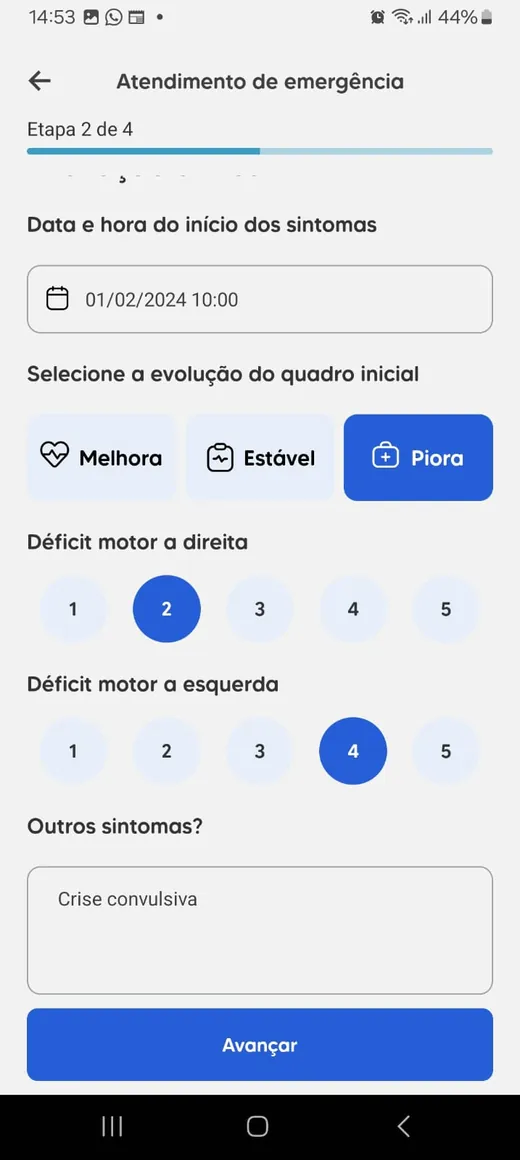
Presto connects your hospital's emergency room to a stroke specialist by video, with the CT scan and patient data on the same screen. The decision is made inside the treatment window, and the consult note goes straight into the medical record.
The bottleneck isn't equipment. It's the decision.
Many hospitals in Brazil's interior already have a CT scanner and thrombolytic drugs. What they lack at 3 a.m. is someone with stroke experience to decide alongside the doctor on duty. Without that decision, patients miss the window, are transferred unnecessarily, or go without a treatment that could have been given right there.
The window is short
Thrombolysis works in the first hours of an ischemic stroke. Every minute of delay costs brain tissue.
Avoidable transfers
Many suspected cases are not acute strokes within the window. Getting it right at the first hospital saves ambulances, beds and network time.
No one decides alone
The general physician on duty gets a specialist beside them for the highest-risk case of the shift, with a protocol and a record.
Same hospital, a different shift
The infrastructure stays the same. What changes is who is there when the decision is made.
From call to consult note in the record
The workflow fits the routine of a busy emergency room, without relying on anyone remembering to call anyone.
Call opened. The team logs symptom onset time and vital signs in the app.
Neurologist on screen. Average response time in Itumbiara. Video with the patient and the team.
CT scan and decision. Thrombolysis, transfer for thrombectomy, or care at the local hospital.
Signed consult note in the record and by email. The case feeds the hospital dashboard.
Built for stroke, not adapted from a video call
Developed by Khube, a technology and innovation company from Rio de Janeiro and a Presto partner.
- Symptom-onset clock at every step, so everyone sees how much of the window is left.
- Structured, digitally signed consult note, filed in the medical record and emailed to the requesting physician.
- Hospital dashboard: calls, treatment window, response time and call duration.
- Protected data: login access, screenshot blocking and handling under Brazil's data protection law (LGPD).
- Asynchronous too: text, images, video and exam links for cases that don't need an immediate video call.
No call goes unanswered
If the specialist doesn't pick up, the system escalates on its own. The call rings even when the phone is on “Do Not Disturb”.
Itumbiara State Hospital, Brazil
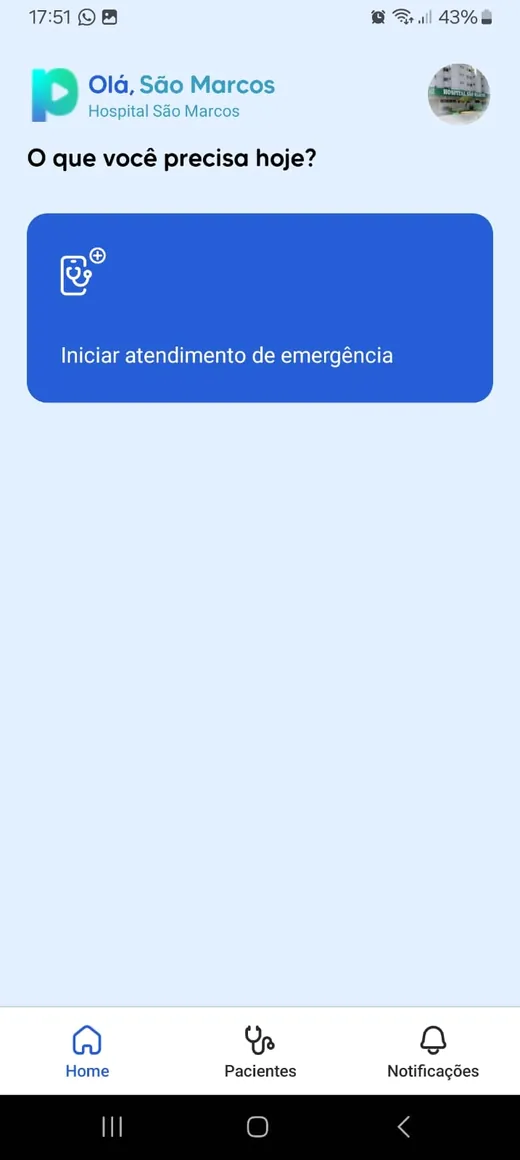
In the Teleneuro Itumbiara project, led together with neurologist Dr. Marco Túlio Pedatella, Presto was, starting in March 2024, the remote stroke neurology service of Itumbiara State Hospital – São Marcos, the referral hospital for southern Goiás. Before going live, we trained the hospital staff, the regional dispatch center and the local ambulance service (SAMU). Project completed.
 Hospital dashboard · Mar 2024 to Feb 2025
What came in across 117 calls
Only a fraction were acute strokes within the window. The rest also needed a specialist to decide.
- Stroke outside window49%
- Non-vascular neurological30%
- Non-neurological16%
- Acute stroke in window~5%
Calls per month, 2024
106 calls from March to December.
| Mar | Apr | May | Jun | Jul | Aug | Sep | Oct | Nov | Dec |
|---|---|---|---|---|---|---|---|---|---|
| 7 | 18 | 21 | 8 | 6 | 13 | 10 | 6 | 5 | 12 |
Aggregated data from the Presto dashboard, March 2024 to February 2025. No individual patient data is disclosed.
More than a video call
Technology is the visible part. What makes teleconsultation work is a hospital that is ready to use it.
Assessment
Site visit: the current stroke pathway, the team and the infrastructure.
Setup
Devices, connectivity, team onboarding in the app and integration with the medical record where available.
Protocol
The stroke pathway written with the team, from the door to the CT scan and the decision.
Training
On site, with simulations, for emergency staff, nursing, dispatch and ambulance services.
24/7 operation
Starts supervised and moves to full operation, with periodic indicator reports.
The specialist can be far away.
The team can't.
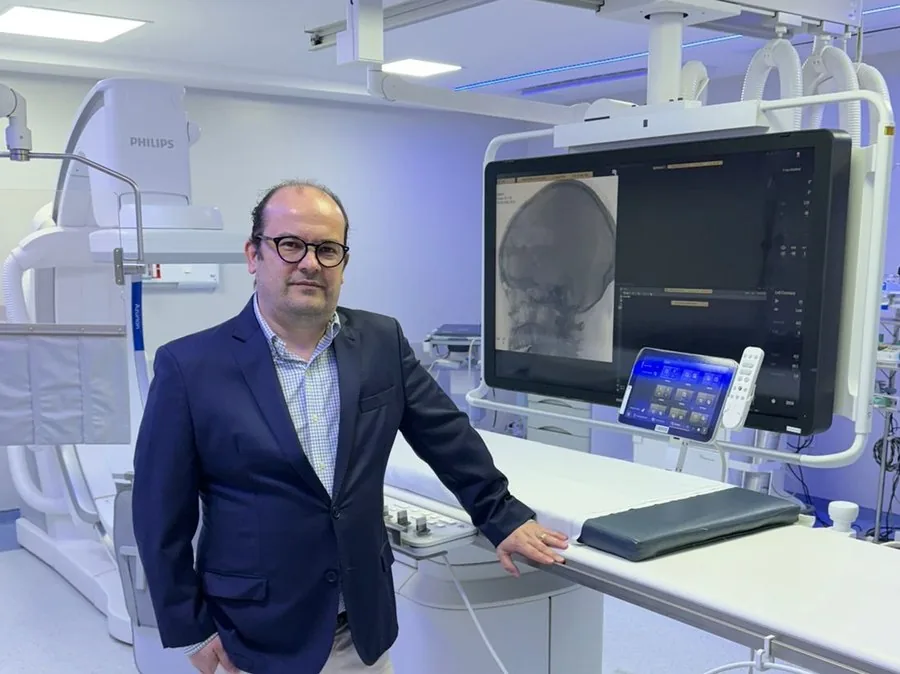
Marcos Spadoni, MD, MBA
Endovascular neurosurgeon and founder of Presto. The physician who decides remotely also performs thrombectomy, and knows the patient's path to the angiography suite.
- Chief of Neurosurgery at HUGO, Goiânia's state emergency hospital (2011–2024)
- Co-creator of the first public-system stroke unit in the state of Goiás, at HUGO
- Interventional Neuroradiology training at Instituto ENERI, Buenos Aires
- Vascular neurosurgery observership at Barrow Neurological Institute (USA)
- MBA in Healthcare Management and Innovation
Medical director · CRM-GO 10473 · RQE 8914
HUGO Stroke Unit
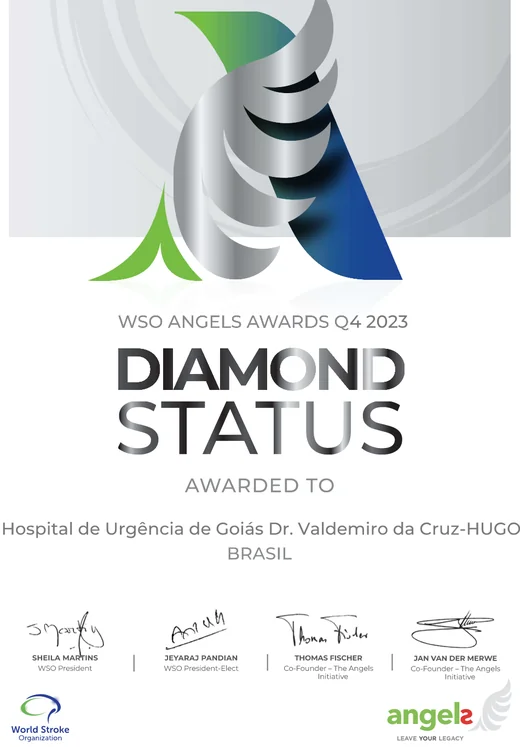
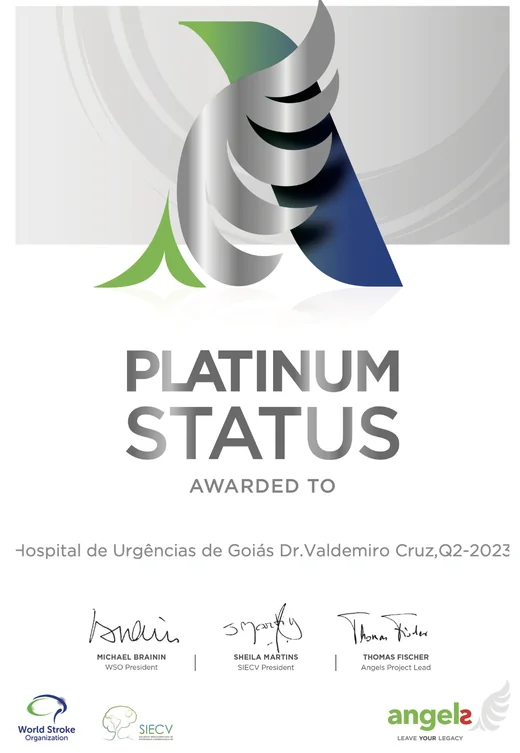
World Stroke Organization (Angels Awards) certificates, which assess the speed and quality of stroke treatment in hospitals worldwide. Earned by the HUGO Stroke Unit.
Stroke Unit of the Goiás State Emergency Hospital (HUGO), co-created by Drs. Marcos Spadoni and Marco Túlio Pedatella (neurologist). Thrombolysis figures: unit coordination, Dr. Marco Túlio Pedatella.
For those caring for stroke far from major centers
Based in Goiânia, Brazil. Remote coverage for hospitals across the country, especially where neurologists are scarce, and open to partnerships in other underserved regions.
Health departments
A stroke network with a neurology hub linked to regional hospitals, ambulance services, patient regulation and the thrombectomy center, with indicators for management.
Regional and private hospitals
A stroke neurologist available 24/7 in the emergency room without an on-site specialist shift, enabling the hospital to handle more complex cases.
Disasters
Presto Social is a ready-to-deploy arm to support, remotely, health facilities isolated by disasters, with volunteer physicians, nurses and psychologists.
It works in the public system. The challenge is getting there in time.
The RESILIENT trial, run in 12 Brazilian public hospitals, showed that at 90 days 35% of patients treated with thrombectomy were functionally independent, compared with 20% without the procedure. The trial's economic analysis, from the public-system perspective, showed the treatment is cost-effective. What is missing is getting patients there in time, and that starts with the decision at the first hospital.
Martins SO et al. Safety and Efficacy of Thrombectomy in Stroke Patients in Brazil (RESILIENT). N Engl J Med. 2020;382:2316–2326.
What health managers usually ask
What does a hospital need to use TeleStroke?
A CT scanner available 24/7, thrombolytic drugs in the emergency room, a stable internet connection, a phone or tablet in the emergency room and a team trained in the protocol. Presto helps organize the rest during implementation.
Is stroke telemedicine allowed in Brazil?
Yes. Physician-to-physician teleconsultation is regulated by Federal Council of Medicine Resolution 2,314/2022 and by Federal Law 14,510/2022. The local physician remains responsible for the patient; the specialist advises and records a digitally signed consult note.
How long does implementation take?
The reference timeline is 90 days: assessment, setup, protocol, on-site training and 24/7 operation.
What if the connection drops during a call?
There is a phone backup plan and 24/7 technical support. If the specialist does not answer, the app escalates automatically until the backup plan kicks in.
Does Presto work outside Brazil?
Presto was built in Brazil's public health system and is open to partnerships with health systems in other underserved regions.
How does contracting work?
After an initial conversation, we prepare a proposal based on the call volume and the structure of the hospital or network.
Let's talk about your hospital or network
A 30-minute call to understand your network, your stroke volume and what would make sense to implement. You'll speak directly with Dr. Marcos Spadoni.
- Phone+55 62 98118-8958
- Emailmarcos@spadoni.med.br
- LinkedInPresto Telemedicina
- Based inGoiânia, Brazil